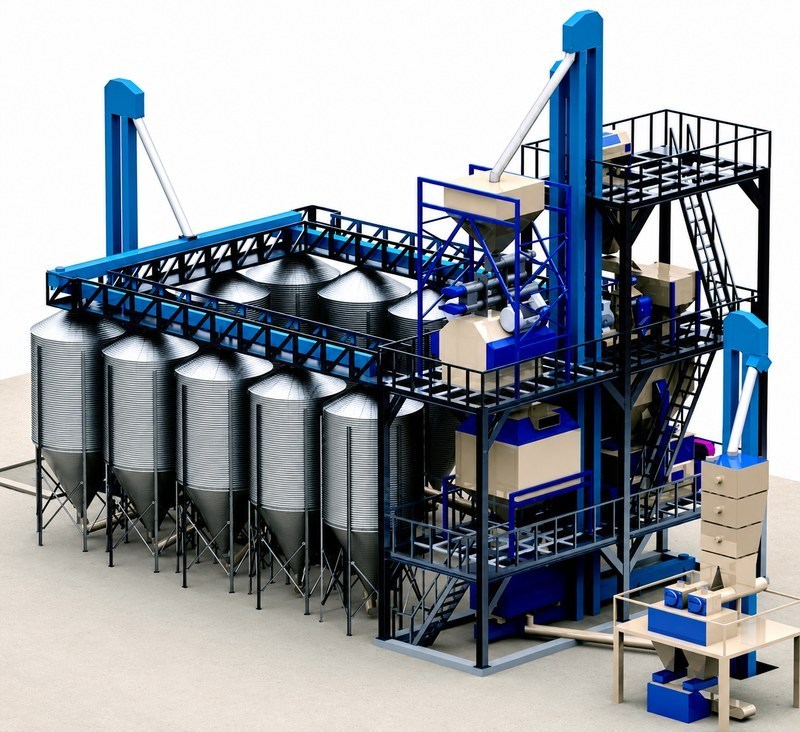
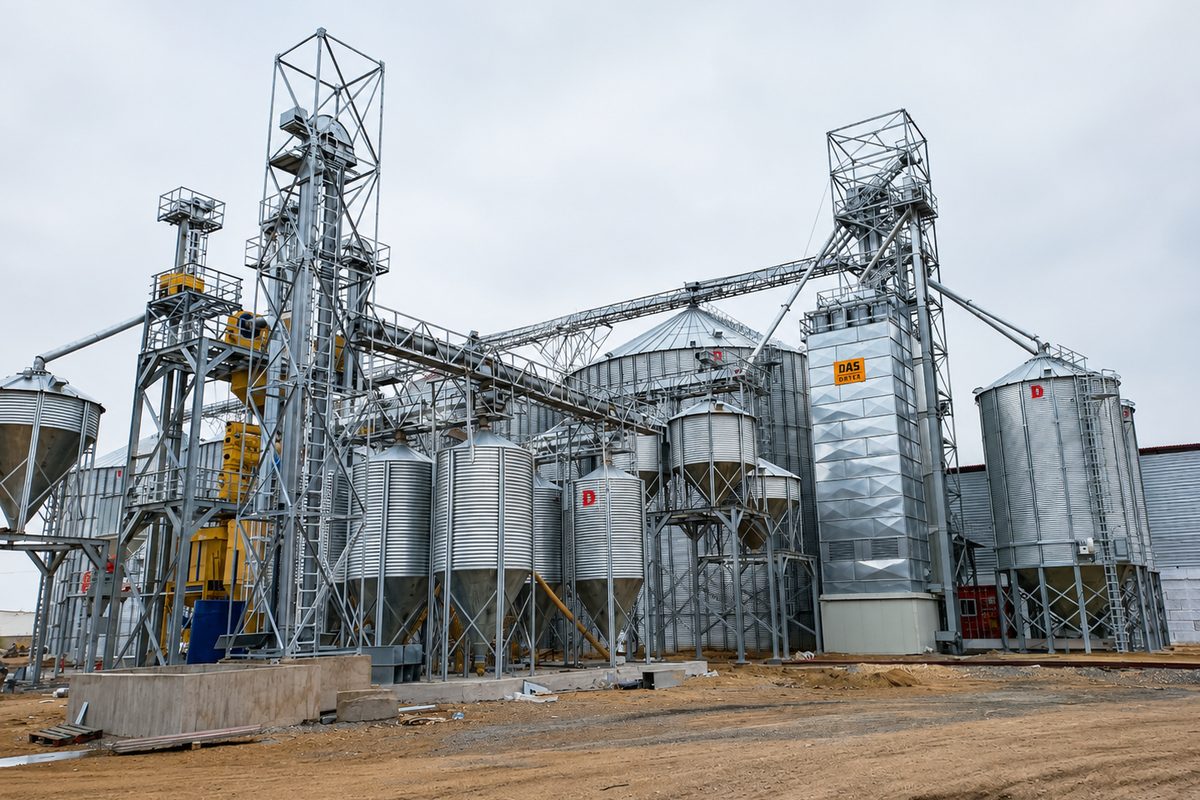
Feed Mills
Complete animal feed milling plants — grinding, batching, mixing, pelleting and bagging — built for uniformity, biosecurity and uptime.
Overview
Nutrition at industrial scale
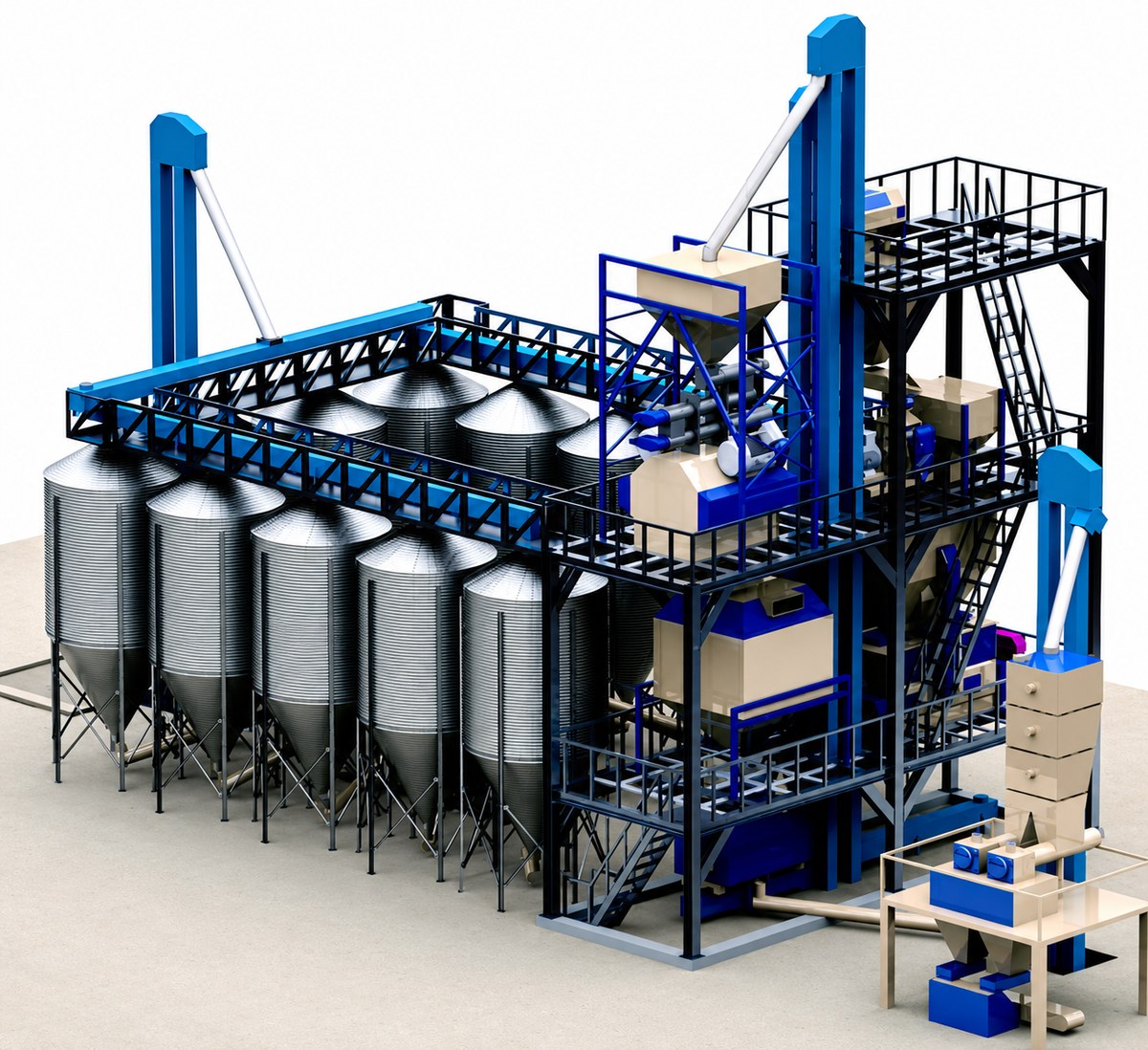
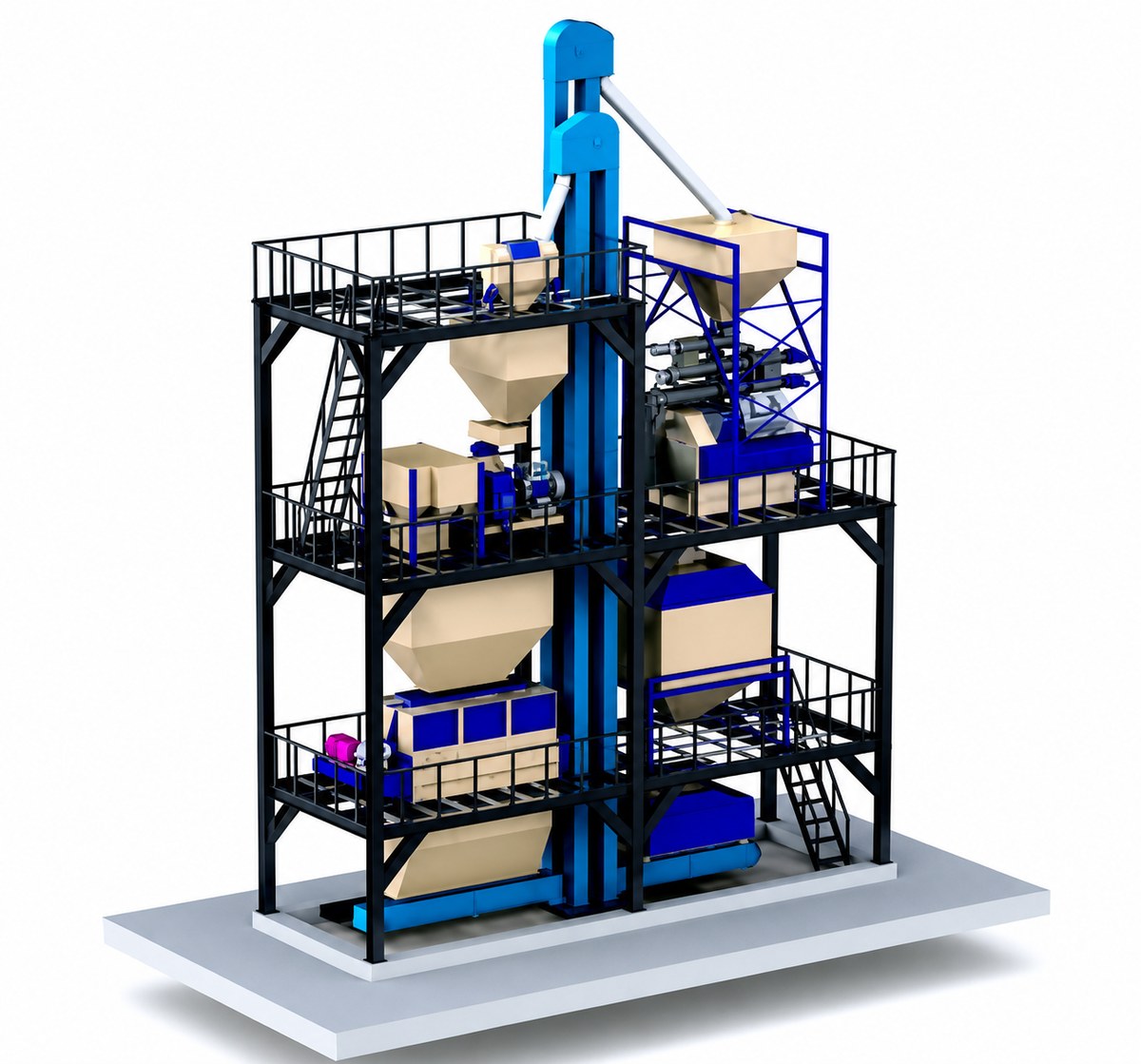
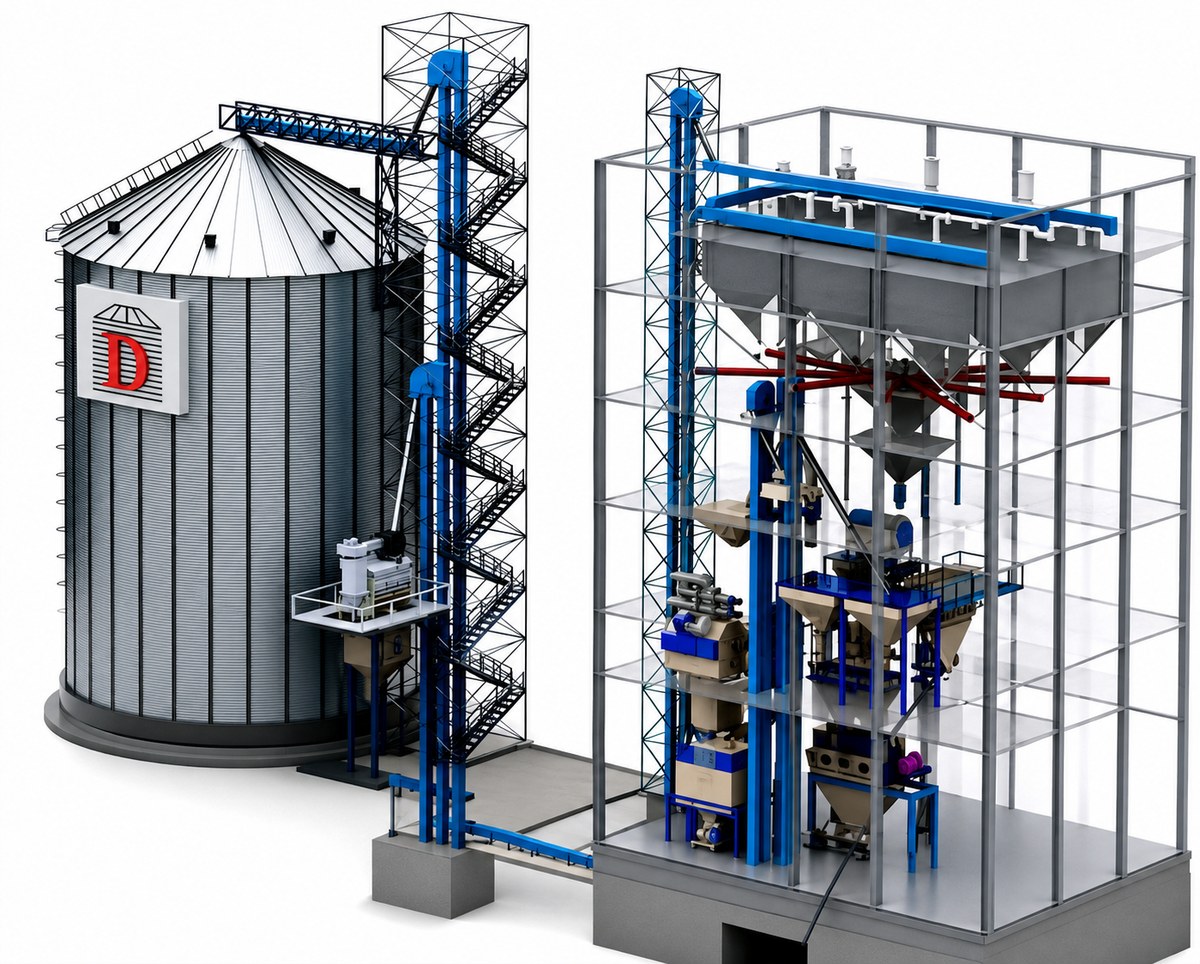
Feed quality drives farm profitability, and it starts in the mill. The Grains designs and builds complete feed plants — poultry, cattle and aqua feed, 5 to 60 tonnes per hour — covering intake, hammer milling, computerised batching, mixing, conditioning, pelleting, cooling and automated bagging, engineered for consistent particle size and pellet durability.
Benefits
The numbers that matter
±0.1%
Batching Accuracy
Precise dosing protects formulation cost and animal performance.
60 TPH
Maximum Capacity
Single-line capacities to serve integrated poultry operations.
PDI 95+
Pellet Durability
Robust pellets that survive handling and reduce fines.
<5%
Mixing CV
Uniform nutrition in every kilogram of feed.
Key Features
Engineered in every detail
Computerised Batching
Load-cell weighing with recipe software achieves batching accuracy within ±0.1%.
High-Efficiency Grinding
Hammer mills with screen change systems deliver target particle size at low energy cost.
Twin-Shaft Paddle Mixers
Mixing uniformity CV under 5% in 60–120 seconds, with liquid addition systems.
Conditioning & Pelleting
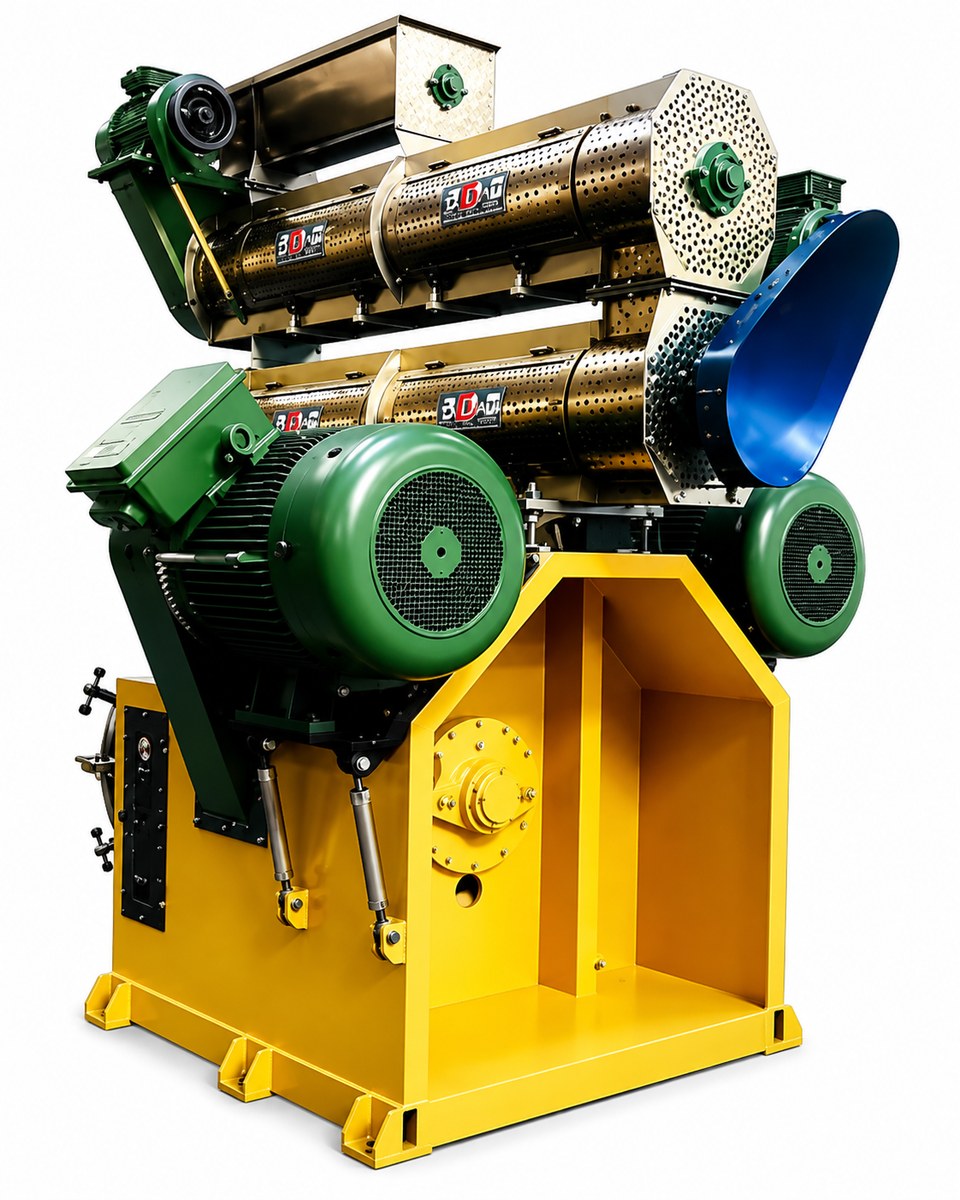
Long-term conditioners and gear-driven pellet mills for durable, hygienic pellets.
Counterflow Cooling
Gentle pellet cooling that protects nutrients and prepares feed for safe storage.
Biosecure Plant Design
Clean/dirty zoning, dust control and hygienic design that supports feed safety programmes.
Gallery
Inside the projects
Technical Specifications
Plant specifications
| Parameter | Specification |
|---|---|
| Capacity Range | 5 – 60 tonnes per hour, single or multiple lines |
| Feed Types | Broiler, layer, breeder, cattle, and floating/sinking aqua feed |
| Pellet Sizes | 2 mm – 12 mm, plus crumbles and mash |
| Batching Accuracy | ±0.1% with computerised load-cell weighing |
| Automation Level | Full PLC / SCADA with formulation management |
| Dust Emission | Filter-controlled, designed to international norms |
| Utilities | Steam boiler, compressed air and power plant integration available |
Applications
Who it's built for
- Integrated poultry companies
- Commercial feed millers
- Dairy & cattle feed producers
- Aquaculture feed plants
Every feed, every capacity
Our automatic feed mills cover poultry, dairy/cattle and floating fish feed in all capacities, including extruders and pellet lines — one supplier from raw-material intake and grinding to pelleting, cooling and bagging.
FAQ
Frequently asked questions
A mash plant stops after mixing; a pellet plant adds conditioning, pelleting, cooling and crumbling. Pelleted feed improves FCR and reduces waste, which is why most commercial poultry operations in Pakistan now pellet their feed.
Yes, with proper sequencing, flushing procedures and in some cases dedicated lines. We design the batching and routing so cross-contamination between species is controlled.
Roughly 40–60 kg of steam per tonne of pelleted feed, depending on formulation. Boiler sizing is included in our utility engineering for every pellet plant.
Including raw material godowns, silos and finished goods storage, plan for roughly 4–6 acres. We provide complete plant layout drawings during the proposal stage.
Related Solutions
Explore more plants

Planning a feed mills project?
Share your capacity and site details — we'll respond with a technical concept, budget range and delivery schedule.